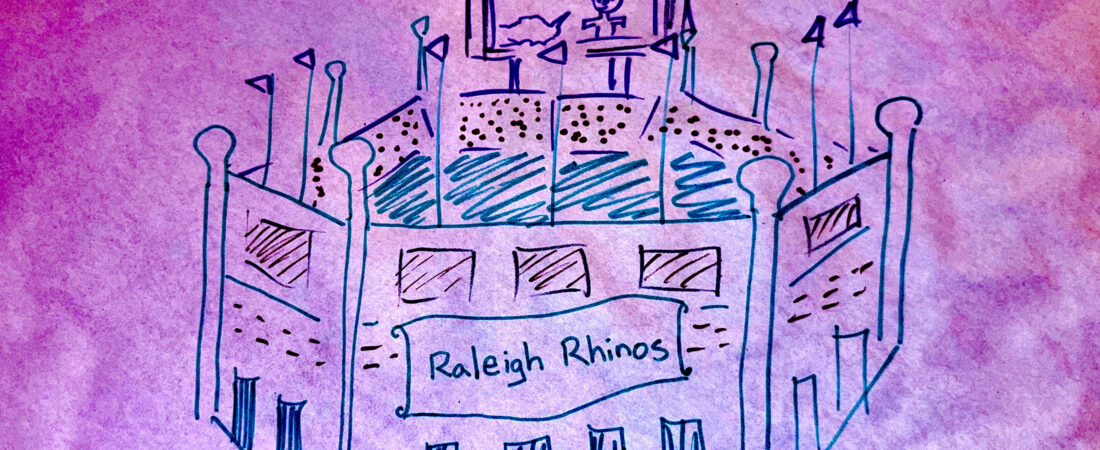
Though it is fun to talk about specific MLB parks, rank them, argue old vs. new, etc. Let’s talk more generally about the elements that make a ballpark good and how that might apply to our Raleigh ballpark. I have a few categories here, first up is access. (Heads up, this is a long one)
Access
How are we getting to the park? Is there decent public transit? Two parks spring to my mind immediately: Addison Station on the red line for Wrigley Field and the Navy Yard stop on the Metro for the Nationals. There are plenty of others, but these are both examples of the ease and travel-comaraderie good public transit provides. Raleigh is not known for its public transit. In fact, detractors cite this lack as a strike against Raleigh’s gaining a team. I have no doubt that specialized buses would exist immediately. As to whether some light rail transit ever develops… I choose to be optimistic that a ballpark could instigate that kind of new infrastructure.
How much parking are we planning on? Probably need at least one deck, unless we’re sprawling out. This brings to mind the Royals park. I was recently tailgating in the Kauffman Stadium lot for a World Cup match next door at Arrowhead. Tons of surface area for a typical midwestern-style tailgate. Tailgating happens across the MLB, just not at the levels of other sports. Nevertheless, Raleigh has some tailgating culture from college football to Hurricanes hockey. Maybe we need decent surface lot areas.
Walkability really depends on the chosen site. One reason the Padres’ park feels so walkable (aside from being right downtown) is how the field is at street/sidewalk level rather than sunken. Walking by you can see right through to the field in places and it helps it feel connected to pedestrian traffic.
Rideshare access is important and especially so if public transit is limited. On my first visit to see the Mets (Citi Field) I had an impossible time getting a rideshare after the game. It sounds silly, but it’s obviously stuck with me.
I’m not sure how deep biking culture runs in Raleigh, but the free bicycle valet at the Giants’ park is a fun feature, and its easy access is half the fun. That reminds me that the right mix of stairs, escalators, and elevators can make a huge difference for the elderly and anyone using a wheelchair.
Location
We’ll talk specific sites around Raleigh elsewhere. For now, try to picture a favorite park of yours and how it fits the following considerations…
How far is it from the airport? Driving distance probably won’t be further than 15 miles regardless of the site. That’s a great feature for fans flying in for a game.
How far is the park from any entertainment district with restaurants and shops? I think it’s safe to assume that such a district develops over time around a new park… but in the meantime, where else can fans easily stroll? Here I’ll shove in my bias that proximity to the downtown is important. It’s such a weird feeling to watch a Patriots game (for example) and see fly-by footage of Boston. Gillette just isn’t anywhere near Boston. In its defense, the team doesn’t claim city allegiance, rather regional with ‘New England.’ More thoughts on that here. This is my preference showing again, but the Braves now play in Smyrna and visiting that park is not like going to Atlanta, it’s just too far out to feel a part of the city.
The topography of a ballpark matters for many of the considerations above and below (pun!). Is it on a hill or in a gully? Is it flat? Can you see the skyline or some other geographical feature?
My last thought on location has to do with ties to history or culture. In East Raleigh there is an old hospital where the city’s black residents were served for decades. It is an example of the kind of historical and cultural connection that could be integrated into the grounds of a new ballpark and add a sense of place.
Development
Lately, successful franchises have become real estate businesses as much as sports entertainment businesses. Who owns the ballpark footprint and surrounding acres is a big part of how the area develops. Zoning is an interesting factor helping to determine the mix between residential and commercial too. If there is flexibility and space to sprawl you get a funkier area that develops over time. Otherwise it probably looks denser with new urban vibes.
As with any development, there isn’t much incentive to build in public spaces: parklets, public art, squares, benches, splashpads, etc. But these features definitely add to the long term appeal.
Exterior
I’m a fan of lawns or squares that face an external screen showing the game. It pulls the area outside the park into the feel of the game. I also like small window or bare fences that allow passerby’s a glimpse of the action.
An intermediate version of these connections between out and in exists in some parks. I’m thinking of the lawn area at Wrigley (Gallagher Way) where kids play catch and there’s a big viewing screen. On game days you need a ticket to enter the area, but on non-game days it is free and open to the public.
You’ve probably noticed my tight hewing to the terms ballpark or park in this post. This is my attempt to avoid the term stadium. How important is that language? I don’t know, but for me stadium brings to mind NFL arenas and steel veneers. Since Camden Yards the aesthetic model has leaned into brick facades and classic architecture. Not everywhere- the new Yankee Stadium, while impressive, feels like an airport in places- a shiny new concourse with expansive interior light. Of course, the old Yankee Stadium had hints of arena-stadium with the notoriously steep upper decks.
On the most basic level, I’ll forecast an open air ballpark for Raleigh. While the piedmont experiences plentiful rainfall, it’s probably not enough to warrant a roof. As I type, Raleigh has experienced a prolonged drought and a supernatural forcefield deflecting storms. Spring and Fall weather isn’t harsh enough to warrant the sheltering benefits of a retractable roof, but… they are fun. I’m not against the idea. I recently watched the Brewers close their roof in ten minutes. Engineering entertainment! The Mariners’ umbrella-like system was great to watch too. They might actually be a case against building retractable roofs. Despite Seattle’s rainy climate, they only deploy the roof 15-20 times a year.
Interior
How many scoreboards, how big, and how snazzy should they be? Most parks feature one massive board with other smaller boards spread around… or two main boards over both left and right field. I find the ribbons to be difficult to see- when they squeeze them between decks, but I bet if you are used to the ballpark those work just fine. Other little features I appreciate are clocks, temperature, and the recent pitch mph.
The biggest “feel” choice is about enclosed vs. open. Some parks are designed to feel intimate and are walled-in basically. I think of the Ranger’s park in Arlington. That is my least favorite park and bleeds over into my preference for some kind of view out of the ballpark. The more enclosed parks do tend to produce more shade, though- probably the most important variable for me when I’m choosing seats in the summer.
I think there are arguments to be made for a consistent style to the concourses. But it’s fun to change it up depending on what deck it’s for. Am I getting old or is the most important consideration for the concourses the restrooms? Yes, but also yes. The Kansas City airport (among others) features big uni-sex bathrooms that are nice. Each stall is actually walled floor to ceiling. Then the sinks and baby-changing-stations are in a shared space. Oh the luxury of floor to ceiling walls and doors! Any nostalgia for troughs? Not me.
My final thought on interior space is about a common area aside from the game-zone. On my first trip to Gillette last year it was a toe-saver to get out of the cold and into a massive viewing area with drinks. I also have enjoyed the big open concourse at the spectrum center for Hornets games… I think it’s called the Uptown Concourse. In any case, it’s nice to have another area to stay connected to the game but meet up with people from other seats… or just take a break from the action. Jackie’s Landing inside the Durham Bulls’ park is great. So is the Bullpen Tap Bar for the Pirates.
Food and Drink
It’s nice to have some regional featured foods to balance against the standards. I think about the $20 crab sandwich out in San Francisco… that is worth it! That’s a good example because it’s out in center field and creates an adventure within the ballpark. Most parks are starting to feature more grab-n-go options for food and drink. These stalls don’t add much character, but they are convenient. Speaking of convenience, I’m torn on the appropriate amount of hawkers/vendors cruising through the seats. Some students and I watched a hawker in DC stumble down the stairs, teeter over the plexi-glass barrier, recover from his life-or-death moment in 1.5 seconds, and start yelling about lite beer immediately. A scarring scene.
I request a serious investment in the condiment stations. Sure, most parks have what I call “communal vegetables”- the relish, the onions. But some take it to the next level with more elaborate self-serve stations. I could never keep straight whether it was DC or Baltimore with the warming trays and amazing add-ons… But then one time in Baltimore I was looking around for more than just mustard, asked an attendant, and as I was asking this guy in full Orioles gear yelled at me, kind of defensively “this isn’t DC, we don’t have those fancy stations.” So, now I remember.
Seating
How many seats should the park hold? On the Cubs radio call with Pat Hughes and Ron Coomer, they guess the attendance every game during the middle innings. This tradition has given me an interesting view into average seating and attendance. 40,000ish seems about right for most teams. However, this depends heavily on the ratio of general seats to club, box, and party decks. Obviously, as a normal fan, I’d prefer big wide seats and no corporate boxes. But that’s just not how teams secure revenue. My last thought here is that I think it is nice when the lower seats provide the best view of the game (sure), but then the highest upper deck seats get the best views out of the park. This always seemed like a nice balance at parks like Coors- where for $4 you can almost see the game, but you can definitely see the Rockies!

Leave a Reply