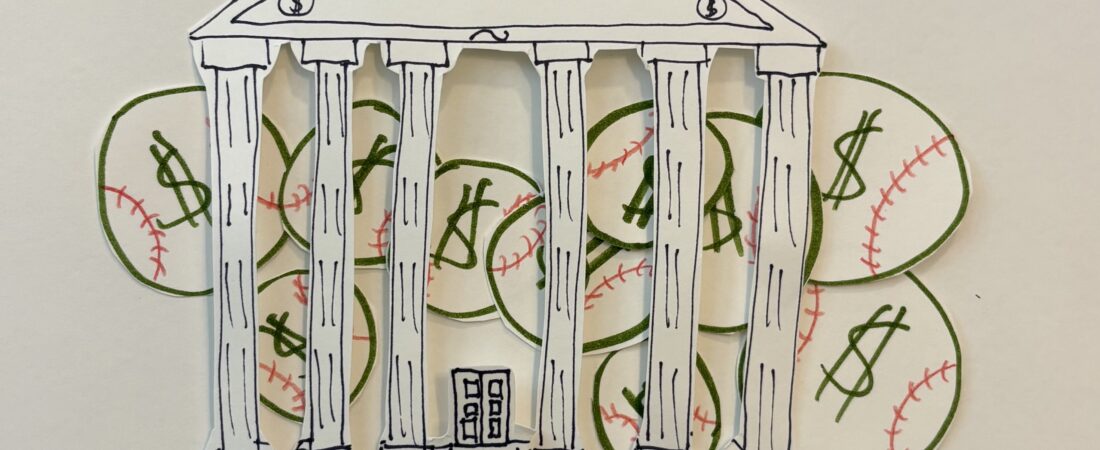
Make it to the end for my calculations of a Raleigh franchise’s financial profile!
Monday August 3rd at 6pm is the deadline for teams to make trades this year. If you’ve never heard or considered what a trade deadline looks like for baseball teams, I’ll give a quick synopsis below. One of my favorite sites for baseball writing is Bleacher Nation. Brett Taylor does a blogathon each year leading up to the deadline where he stays up for 40 hours straight posting quick pieces of rumors and deals. It’s all for donations to the Make-A-Wish foundation. He checks in with videos showing his caffeinated beverage of choice, level of exhaustion, how hard the quiet hours are, etc. It is a great event and a fun journey to follow each year. Check it out!
Now a bit on the trade deadline. This is the time of year when teams decide whether or not they have a shot at the playoffs. If they don’t they will look at some of their players whose contracts end in the fall and think about trading them for young talent. The buyers during trade season try to calculate how much they are willing to ‘pay’ in up-and-coming prospects for a player that might help them win this season vs. future seasons. It’s a difficult calculus for teams. How “all-in” do you want to go this season? How much do you want to endanger the future talent pool of your team?
This year is complicated by two main factors. First, there are a ton of teams who are realistically still in contention for a playoff spot. Just not many obvious ‘sellers.’ And the second factor is the looming lockout next season. I won’t go too deep into the collective bargaining aspect here, but we will likely have a shortened season next year… at the very least, the length of the season is unknown.
Some teams are perpetually sellers. That is a sad place to be as a franchise. Especially because the system is trying to get you young talent. The problem with prospects is that you have to be good at evaluating them. And even then, most don’t turn into good players.
Who are the strong franchises and why? Teams with large fan bases and revenue streams can absorb the cost of contracts easier than teams without. Some franchises, though, seem to thread the needle every year despite middling payroll. The Brewers and Rays are both good examples of the kind of franchise we’d like to see in Raleigh… at least for how talent is managed, acquired, developed, and ultimately traded away at just the right time for new talent.
Can we forecast the kind of franchise Raleigh would have? Yeah, kinda. Let’s start with what each team gets from the central collection of MLB funds. These funds include national media revenues from tv and digital media. Each team also has to throw about half of their local revenue from tickets and merch into the central pool. MLB then spits that money back out to all the teams. It’s about $200 million a year. That’s the baseline for a franchise.
Now we add in the local revenue that the team can keep. This is some basic sketching, but if we cobble together Raleigh, Durham, some Fayetteville, some Triad, some Charlotte into one market we can guess at an additional $165 million. This is mostly me making simple guesses and calculations based on a generic model the MLB has in its current collective bargaining agreement. So where does that put Raleigh in the power rankings for franchise financial health?
Well, at the top are the crazy richies: LA Dodgers, NY Yankees, NY Mets, CHI Cubs. That’s not Raleigh today, and probably not the near future either. At the bottom we have the Guardians, Athletics, and Rays. But you said above the Rays are good? Ah, time to fill our picture in a bit more. Often teams will get ranked by pure team payroll. That’s pretty similar to the total revenue picture I’m painting here. If you want to be mad at your owner, you just compare total revenue to the team’s payroll and some owners are greeeeedy. Revenue is important. How much an owner is willing to put back into the team is important. And just because you have financial resources, it doesn’t mean you can choose and develop the talent. That’s what is so impressive about teams like the Brewers and Rays- they maintain a premier level of talent with lesser payrolls.
Raleigh would fit solidly in the middle tier of franchise financial health. Almost exactly 15th by my guessings. That is encouraging. A franchise like that may not be able to absorb every free agent in the off-season, but it will always be able to take on talent at the trade deadline in a competitive season.

Leave a Reply