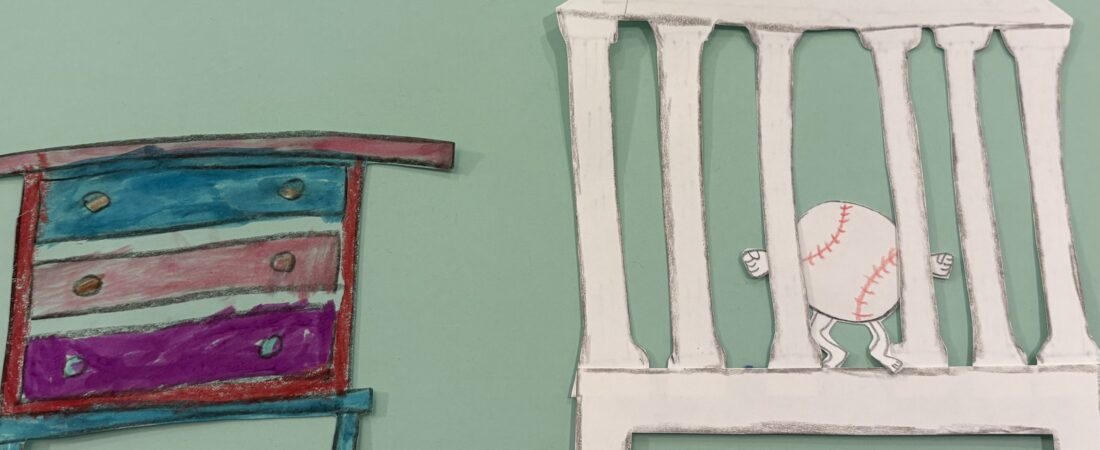
Yes I’m playing off a famous book about pregnancy. And since Raleigh is not yet pregnant with an expansion franchise, we’re still on Chapter One: Before You Conceive.
Pre-conception(s): We are definitely stuck in a cycle of pre-conceptions- mostly about the attractiveness and viability of Raleigh vs. Nashville. This is to be expected. The case for hosting an expansion team must be made and re-made. It can be exhausting to hear the same knee-jerk comments.
Luckily, our city has a great organization tirelessly rebuffing the misconceptions of market size, population, disposable income, etc. Thank goodness for them, because I’m not doing that work. I’m riding in the blissful wake of assumed success. As such, I can draw our attention to the effects of a baseball team on our city. What can we expect a baseball team to mean? In this story, I explored whether or not Raleigh is the kind of city to feel like a baseball town. Here, I want to think through the likely effects of an MLB franchise on Raleigh.
Negative Effects
We can expect more traffic. This traffic is mostly limited to the 81 game days, so it’s not really an increase in daily load. But, will definitely be an increased volume of cars on the road- more congestion, more road wear. And though creative scheduling can reduce the frequency, there will be some days with baseball and hockey games at the same time. That is messy. Especially if the ballpark is in the same basic location as the hockey team.
We can expect some increase in taxes. There are many different ways that cities and states contribute to the expansion process, and they all come with some public money. If that money is in bonds or general revenue, the cost is felt by all citizens through overall taxation. If it is through vacation and tourism taxes, it’s somewhat less of a burden on local citizens, but can have some chilling effect on local businesses that operate during all the non-ballgame days on the calendar. My pitch here is to work some ownership or profit sharing into the public money part of the deal. This can offset some of that tax burden.
RDU Airport already has expansion phases underway, but increased travel means more bodies through the airport and more traffic on connecting roads. The team’s travel is handled privately and shouldn’t contribute in a meaningful way to airport traffic.
Neutral Effects
I think there are many economic benefits for adding a ball club that are hard to measure and/or show up as background factors in long-term growth. Nevertheless, it is worth noting that most scholarship on the matter finds surprisingly small economic benefits for cities. Here’s one example of research that tries to quantify growth and impact. The neutrality is mostly due to the costs to citizens and a kind of replacement effect- where some of the spending on MLB stuff would otherwise have been spent elsewhere locally.
Positive Effects
We can expect a massive tourism increase, especially in the first year when attendance for new teams spikes. This tourism is intra-state, nearby states, and visiting teams fans. Raleigh has been on the national radar for a few years in terms of “top cities that ___.” For many people, a trip to see their team play is just the thing to nudge Raleigh into their “next trip” lists. The framing in national media about the city changes. Other expansion cities saw their city portrayed as “Top Tier” or “World Class” after adding a baseball team.
One of the pieces of growth that is tough to quantify is the development of the area surrounding the ballpark. I grew up outside of Denver, CO. The Rockies ballpark transformed that area and really connected downtown to the northern neighborhoods- a complete development success.
There are citywide events that go beyond gameday. Events like name-reveal, logo-reveal, uniform-reveal, and rallies. During the full calendar year there are signings, team-sponsored charities, and often a full team convention. The sport is an entertainment avenue beyond the regular season.
My favorite expected effect is what social life looks like with another team playing most days. What it feels like to be out and about during a gameday. What it feels like to sit at a bar and strike up a conversation easily with anyone wearing the “R.” It improves small talk. City development (new places, construction, etc.), the weather, the ‘Canes, and (now) baseball!
Effects Specific to a Hockey Town
Previous expansion cities may give us some additional clues. Colorado was mostly a football town (Broncos) and had NBA (Nuggets). Miami is basically a basketball town (the Heat) and has an NFL team (Dolphins). Tampa Bay is more even, but still feels more like an NFL (Buccaneers) town, with Hockey (Lightning). Arizona had NFL (Cardinals) and hockey (Coyotes). So, I take it back- I’m not sure those examples give us much insight into adding an MLB team to a singularly hockey-town. We can definitely assume less division of sport dollars, though, than those cities experienced.
Leave a Reply